
Who We Are
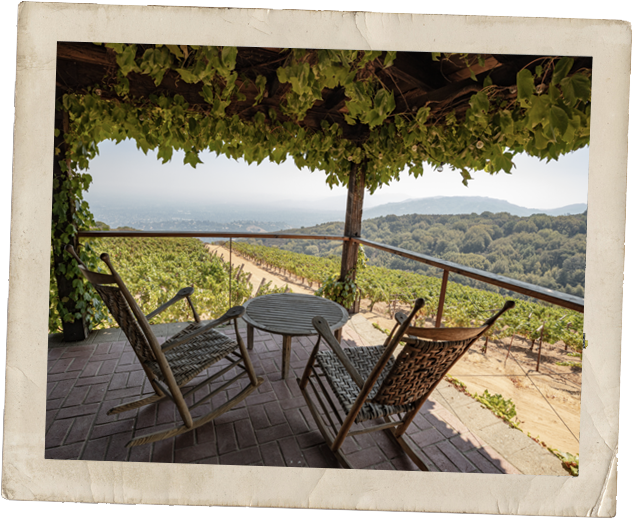
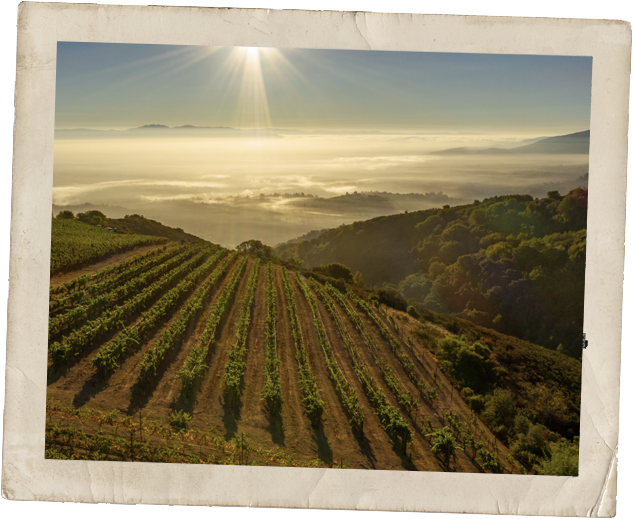
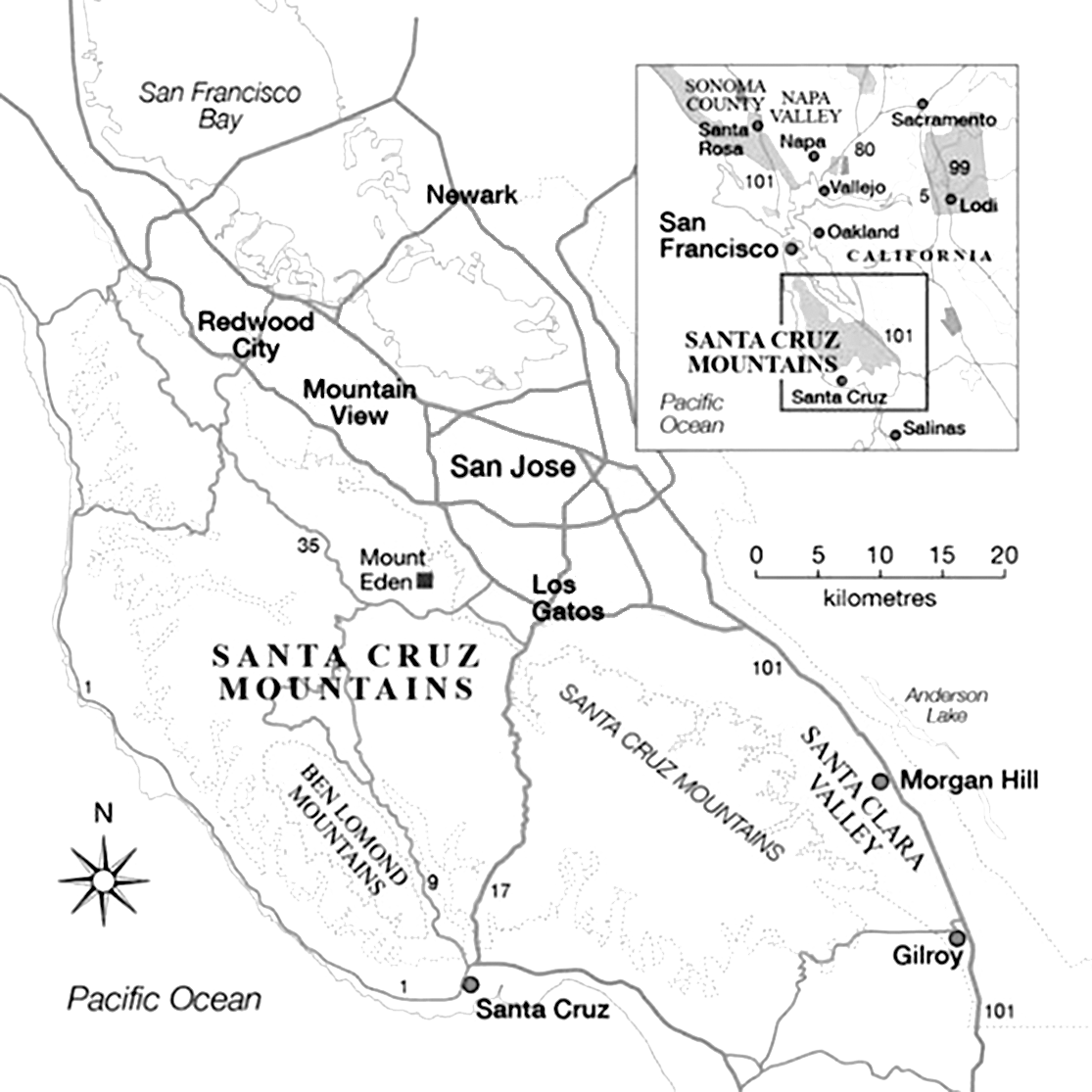
Mount Eden Vineyards is a small historic wine estate perched at 2000 feet overlooking Silicon Valley in the Santa Cruz Mountain Appellation, about 50 miles south of San Francisco. Founded in 1945, it is recognized as one of the original “boutique” California winery properties, focusing on small lots of Pinot Noir, Chardonnay and Cabernet Sauvignon. Mount Eden’s lineage of estate bottled Chardonnay and Pinot Noir is the longest in California. Planted in austere, infertile Franciscan shale on a cool, exposed mountaintop, these low-yielding estate vineyards have consistently produced world-class wines for over eighty years. In 2007 Mount Eden acquired an additional 55 acre wine estate in the Saratoga foothills, which was christened Domaine Eden.
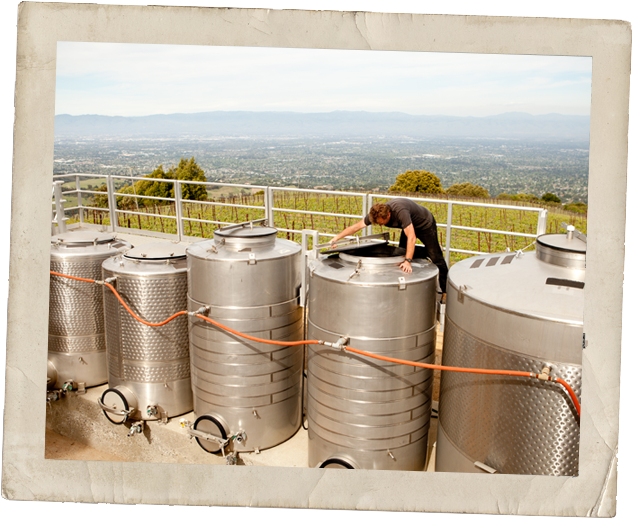
Mount Eden Vineyards also produces non-estate Chardonnays from the central coast, primarily Edna Valley. They have great success making Chardonnay from the Wolff Vineyard and are continually recognized as making outstanding wines from that region.
Since 1981 Jeffrey Patterson has guided the winemaking and grape growing at Mount Eden. His emphasis is on wine growing rather than winemaking; and an obsession with gentleness and naturalness in the handling of the grapes and wines is his ongoing passion.
Philosophy
Winemaking is simple in its basic process. In fact, it is the natural decomposition of the grapes. Yet on the way to fine wine, it can get very complex. Wine, at its essence, is a snapshot of the ecology of the vineyard. By the ecology I mean the slope, soil, exposure, wind, sun, grape variety, and weather that particular year. At Mount Eden every bottle is a succinct expression of the vineyard’s ecology. Year in and year out we produce wines from the same vines, in the same cellars, by the same people. With that purity of expression comes a true “vineyard wine”. This is so even with our non-estate Chardonnay from the Wolff Vineyard in Edna Valley.
Most large commercial wines in the marketplace are blends from several vineyards and are what I call “winemaker wines”, meaning the composition and harmony are built by the palate and pocketbook of the winemaker. “Vineyard wines” differ in their basic approach and are usually very small in volume. I know it’s a well-worn cliché, but I do believe that all great wines are “made in the vineyard”. Therefore, over the years I have found myself working in my vineyards more and more. The connection to the estate vineyards and my influence over the quality of the fruit is my biggest satisfaction.
Not to say that the wine cellar is not important or satisfying, but the challenge and creativity is greatest in the vineyard. There is also a larger legacy left in the vineyard operations. The overall design and health of the vineyards that I will leave my successor one day will be the best possible, and I take a lot of pride in that. In the winemaking arena the approach has always been to let the wine and the vintage speak for itself. A gentle handling of the fruit, no pumping for instance, is the first step, as well as careful monitoring of the fermentations using natural yeast populations. Like an airline pilot, I intervene only when necessary, guiding the process and being there should any unexpected turbulence occur.
The human factor in any vintage is significant. For instance, harvest parameters and subsequent wine style, method of fermentation, type and age of barrels used, length of aging cycle, how one finishes the wine (whether or not to filter) are all important and are totally in the hands and head of the winemaker. Experience is a great help, and I am fortunate to have spent my entire career here at Mount Eden. The style of our wines are for a select few who typically have a long and wide wine-drinking history. Our customers are able to appreciate the intensity of character and purity of the terroir because of this.
Fine wine should be fun and delicious. Whether with food or without, it shouldn’t be too serious or pretentious, yet it often is. I try in my public persona to communicate this levity and hedonism whenever possible.
Region and Climate
Mount Eden’s larger home is the Santa Cruz Mountain Appellation. It is American’s first mountain AVA—recognized in 1981—with winegrowing dating back to the 1860’s. The appellation encompasses the Santa Cruz Mountain range, with boundaries defined by the elevation of the fog levels at daybreak in the spring and summer months, typically, between 600 to 1000 feet. Those vineyards above the fog are dryer and see abundant sunlight; while below this line vineyards are compromised by the cooler moist conditions. Mount Eden’s estate vineyards are at 2,000 feet.
In California, winegrowing climates are controlled primarily by the Pacific Ocean—the closer a vineyard is to the coast, the cooler the daytime high will be. This is important in giving the vines an even and slow ripening environment, especially with the sensitive French varietals grown at Mount Eden. Being high in the mountains, close to the ocean and the San Francisco Bay allows ideal, long, fog-free days with low daytime highs and a relative absence of heat spikes in the summer and fall.
In addition, most of the acres farmed here are on eastern slopes. This direction gives the estate vineyards an incidence to the sun which promotes this desired slow, measured ripening.
The combination of elevation, which keeps the vineyards free of fog and frost, California’s Mediterranean climate, and sufficient rainfall in the winter, allows Mount Eden to dry-farm the vineyards to produce superb fruit year after year.
Our History
Paul Masson & Martin Ray: The Sparkling Legacy Behind Mount Eden Vineyards
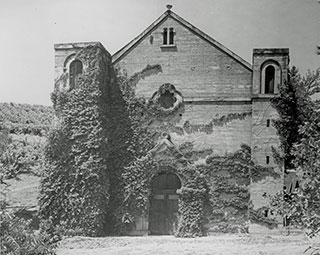
Paul Masson’s wine cellar at La Cresta
Paul Masson, who grew up in Burgundy, set out for California in 1878 at the age of 19. He stayed for several years in Northern California, settling in the Santa Clara Valley until his money ran out. Returning home and finishing college at the Sorbonne, he begged his parents to let him return to California to seek his fortune as a winemaker. This was a big step for a young man from rural France and a reflection on an adventurous time in the world; a time of reinvention when the vines of his beloved Burgundy were dying from the root louse phylloxera.
His karma was indeed blessed, for soon after arriving in San Jose, he reconnected with Charles LeFranc, the owner of the Almaden Vineyard and Wine Company, and became his winemaker and son-in-law. Misfortune happened, however, two months after his marriage to Louise LeFranc, when Charles was fatally injured in a horse and buggy accident, and Paul was thrust into an ownership role with Almaden. As the 1890s progressed, Paul became less motivated by being a principal of Almaden and dreamed of owning his own wine estate.
In early 1900, Masson realized his goal and purchased 573 acres in Saratoga, California, which he named La Cresta. He set about planting 60 acres, mainly to Pinot Noir and Chardonnay, with cuttings from Burgundy, probably from the vineyards of his friend, Louis Latour. His singular emphasis became sparkling wine. This was a time in America when serious méthode traditionnelle was rare, especially when made from the classic varieties Pinot Noir and Chardonnay, which were very hard to grow and very low-yielding. The Paul Masson Champagne Company was born.
Starting with the initial harvest of 1905, Paul proved he was a good winemaker and a good promoter as well. Success was in his future in these remote and rugged mountains. Alas, a mere 16 years later, the scourge of Prohibition shut the doors on commercial winemaking in America. Masson eked out an existence by whatever means possible, keeping the vineyards going and selling sacramental wine to the Catholic Church. These 13 long years were devastating to the true wine people of California, who saw wine as a part of normal, civilized life. Emerging from that struggle, Paul was in his mid-70s and decided to sell his wine business.
Martin Ray, who grew up near Masson’s property, often watched the vineyard workers tending the vines. Over time, he met Paul and a casual friendship grew. Paul had great affection for Martin, as he had no sons of his own, and allowed him to work in the cellar and learn the art of making fine wine. This relationship was pivotal to Mount Eden’s evolution.
In 1936, Prohibition was over and The Paul Masson Champagne Company was for sale. Martin, a stockbroker at the time, had recently suffered a nervous breakdown and was encouraged by his doctor and wife, Elsie, to change careers. He fondly remembered his days up at the Masson vineyard and decided to try and buy the property. Initially, Paul said no and suggested that a better idea was to buy the mountaintop next door to the north (what is now Mount Eden) and establish a new vineyard and winery. Not to be dissuaded, Martin stubbornly decided to buy the Masson vineyards anyway.
A mere six years later, after operating The Paul Masson Champagne Company and eventually selling the property to the corporate conglomerate Seagram’s, he took Paul’s advice.
Planting a Legacy: Martin Ray’s Vision Takes Root at 2,000 Feet
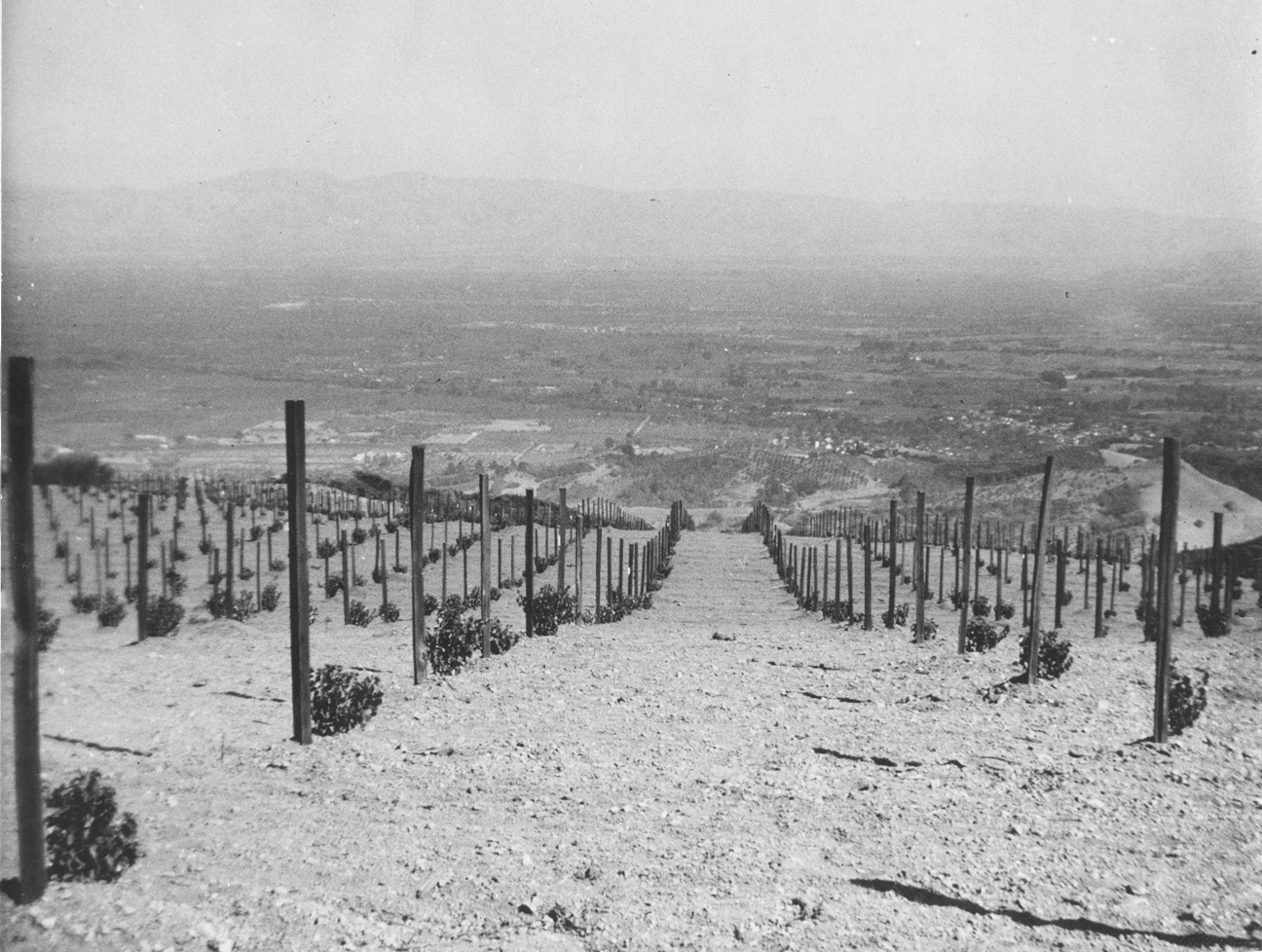
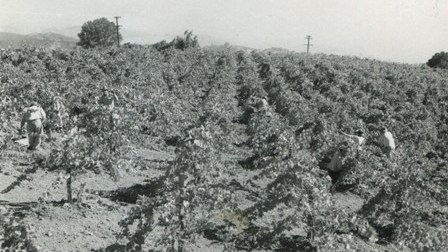
Martin Ray’s Pinot Noir Vineyard overlooking the Santa Clara Valley
Martin purchased the first parcel of the mountaintop, now the site of Mount Eden Vineyards, in 1943 and proceeded to plant Pinot Noir and Chardonnay vines with cuttings from Paul Masson’s La Cresta vineyard. He was a maverick in every sense: small production, involvement in every aspect of winegrowing, lofty prices, and lengthy dinner parties featuring his wines alongside the finest Burgundies available. He named his wine estate Martin Ray.
The work was arduous, especially since the vineyards were 2,000 feet above the Santa Clara Valley, up a rough two-mile dirt road. Many of the farming advances that we take for granted today were not yet developed. Yet Ray endured, believing in the noble effort to create something unique and delicious. He was an outspoken advocate of making pure varietal wine at a time when blending was common. A passionate believer that California could make world-class wines, Ray was a wine pioneer if ever there was one.
Love, Loss & Legacy: Martin Ray Expands His Vision at Mount Eden
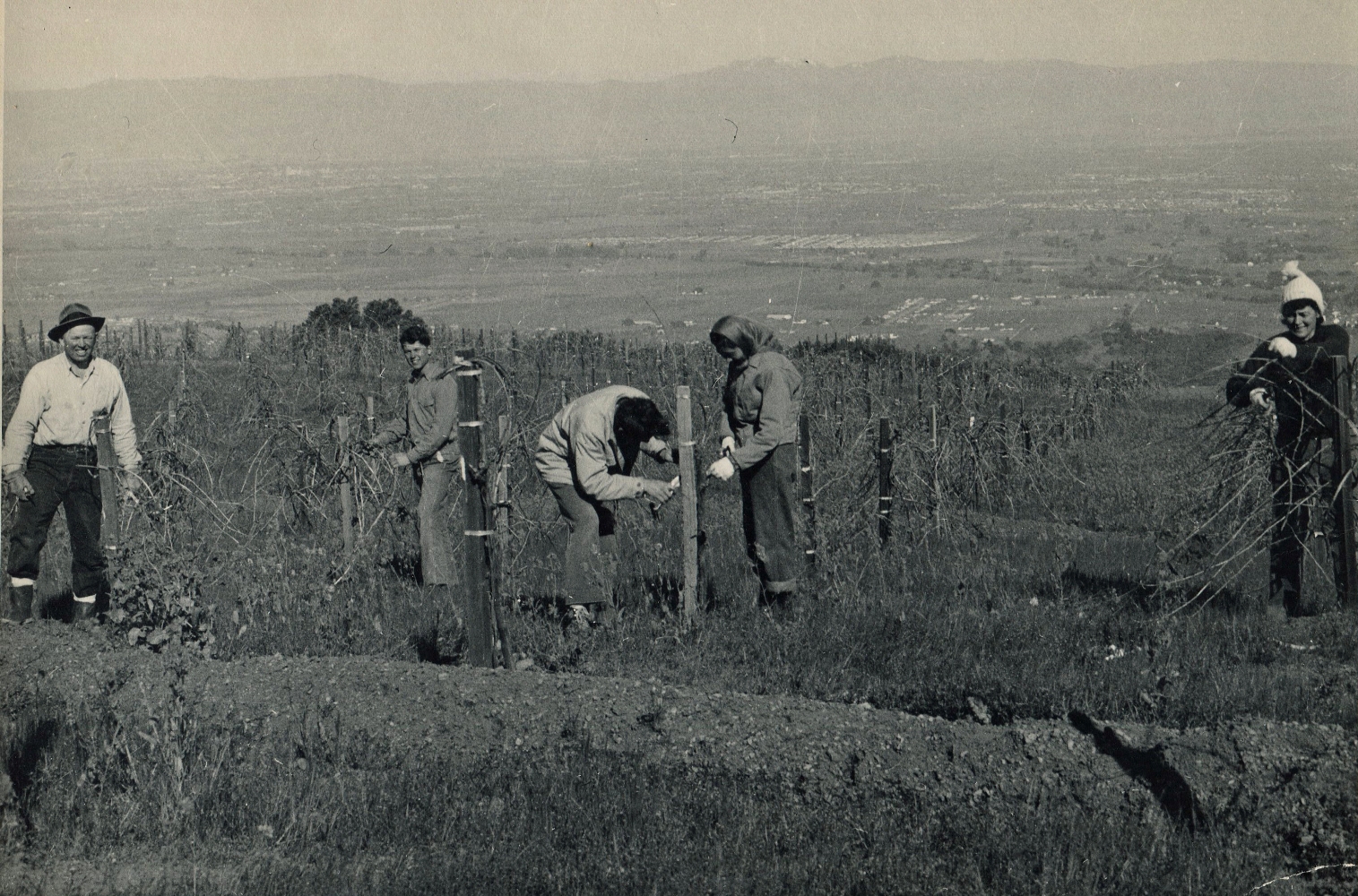
Martin with his second wife, Eleanor, and her children
By the beginning of this decade, Martin Ray was well on his way to realizing his dreams, but suddenly, in 1951, his wife, Elsie, was diagnosed with cancer and quickly passed away. Ray was devastated. Fortunately, his long-time college friend Eleanor Kamb, who had always loved Martin, came to his rescue, and within a few months they married. On the peak of Mount Eden, they built their residence with a cellar underneath. Surrounding the house were 3 acres of Pinot Noir, 7 acres of Chardonnay, and 1 acre of Cabernet Sauvignon. Ray expanded the vineyard acreage slowly. Including 3 acres of Cabernet Sauvignon on the lower elevations using cuttings from Emmett Rixford’s La Questa Vineyard in Woodside. Martin bottled all his wines at that time in Champagne bottles, complete with Champagne corks and wire hood. He nailed them shut in a mahogany box. They were packaged to cellar like mint coins.
A Fractured Dream: Partnerships Challenge Ray’s Independent Spirit
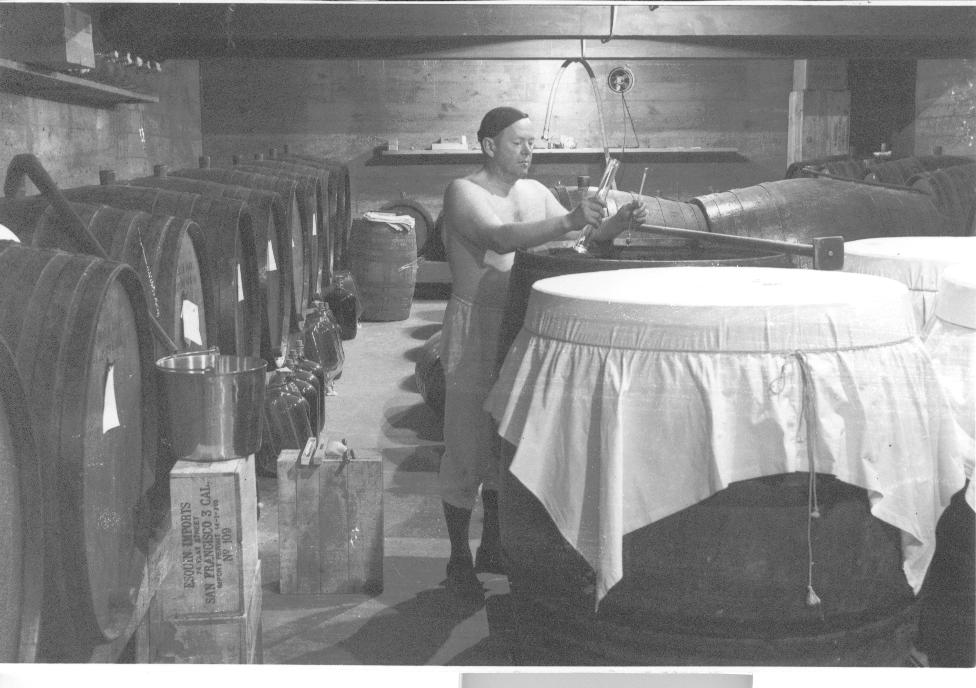
Martin in the wine cellar
This was the last full decade Ray was to produce wine on the mountaintop estate he created. In the early 1960s, Martin established a partnership to develop more vineyards and built a new residence for its members. Given Martin’s autocratic style and emotional fragility, this proved to be a fatal mistake for him and his family. It’s ironic that just as California was emerging from the doldrums of making ordinary table wine for the masses and was beginning to realize its potential for greatness, Martin, the sole voice in the wilderness for quality and prestige, was failing in his partnership.
A New Era Begins: From Martin Ray to Mount Eden Vineyards
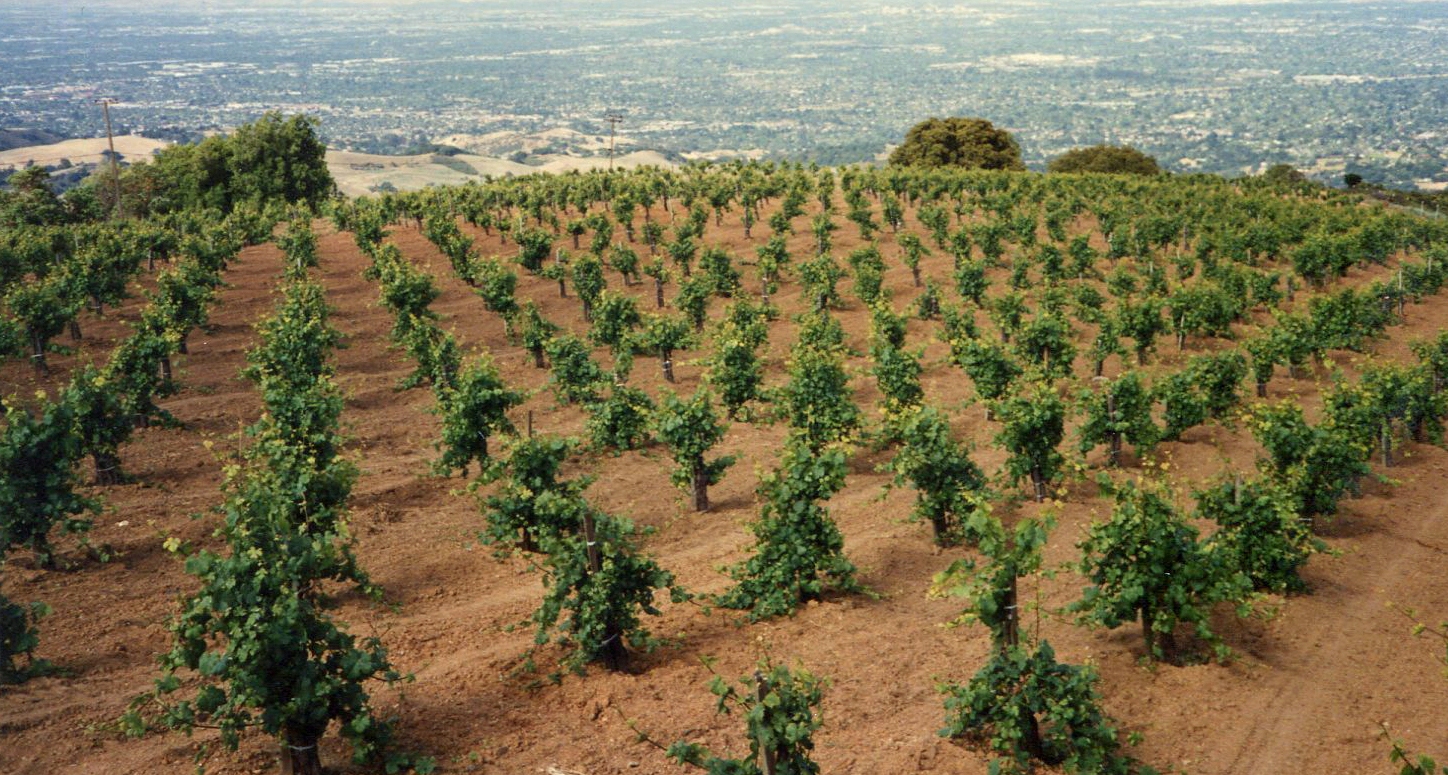
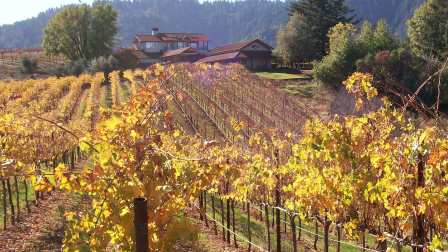
Original Estate Pinot Noir Vineyard
Martin Ray lost his property to his investors in 1970 and ended up living the last years of his life on a small parcel below the estate vineyards in the concrete residence he built for the partnership.
In 1972, the estate was renamed Mount Eden Vineyards and the partners set out to make profound Chardonnay, Pinot Noir and Cabernet Sauvignon by hiring as a consultant the well-known winemaker Richard Graff, founder of Chalone in the Pinnacles area of Monterey. After the stunning 1972 and 1973 vintages, they hired the now-iconic Merry Edwards, who produced the wines from 1974 to 1976. The late 70s were a mixed bag of short-term winemakers, although Graff continued to steer them as best he could. An additional non-estate Chardonnay program was developed since the estate production of all three varietals combined was under 1,000 cases. For sixteen years the non-estate label was called M.E.V. due to a legal agreement with Villa Mt. Eden. (In 1988, the non-estate chardonnay was finally labeled as Mount Eden Vineyards, and the M.E.V. label was dropped.)
The Patterson Era Begins: Reviving Tradition and Replanting the Future
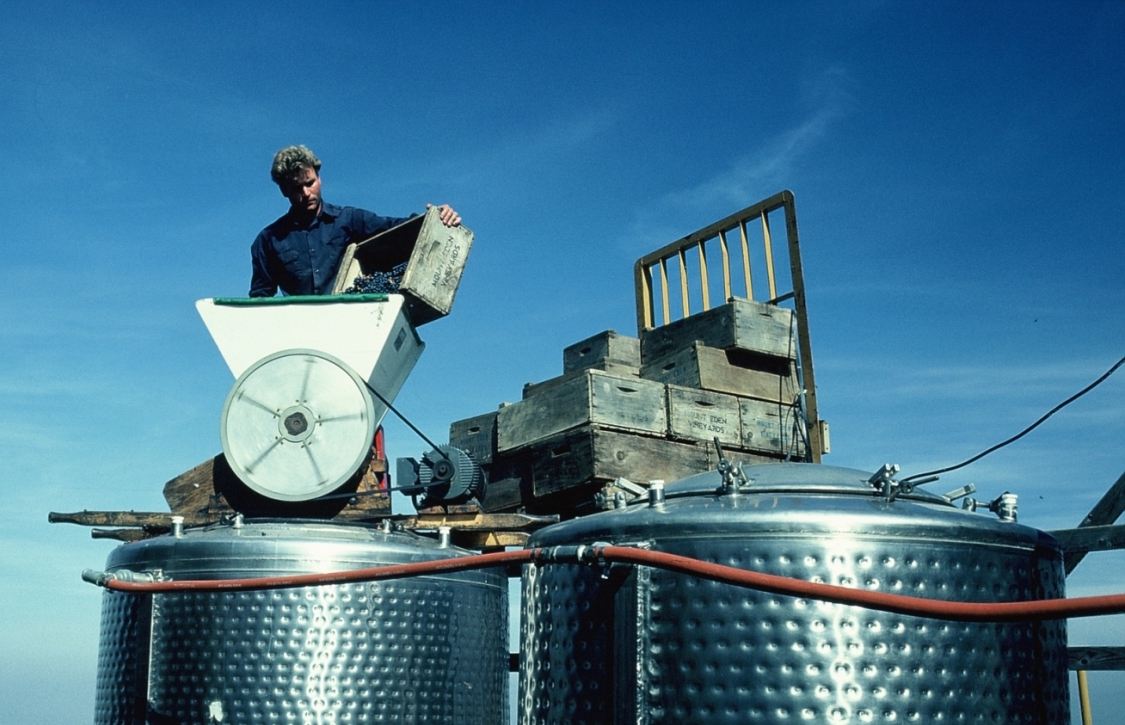
Jeffrey Patterson
The modern era of Mount Eden Vineyards came about unexpectedly, with Jeffrey Patterson being hired as the assistant winemaker in 1981. Having graduated in biology from UC Berkeley in 1975, Jeffrey was fortunate to have been in Berkeley in the 1970s when food and wine were becoming relevant. Chez Panisse and Kermit Lynch had just opened their doors, and there was a buzz about local food and French wine. He fell in love with wine and cooking while working in Bay Area restaurants, and in 1979, he enrolled at UC Davis as a full-time concurrent student taking enology and viticulture classes.
In 1980, Jeffrey married Ellie Davis and they went for a three-week honeymoon in France, where they ate in as many 3-star restaurants as they could digest and visited their favorite iconic French producers: Krug, Domaine Dujac, and Domaine Leflaive.
In 1981, Mount Eden’s general manager, Fred Peterson, was looking to hire someone to help in the cellar. Jeffrey had visited Mount Eden as a wine enthusiast in 1978 and knew of the pedigree of this unique site. So in August, Patterson, at the age of 29, came on board to assist and learn. He and Ellie moved into the cottage built by Martin Ray in the 1940s.
Unfortunately, Mount Eden had been struggling financially for many years, and in December 1982 the shareholders fired Chalone, who had been recently hired to be the management company, and became wholly independent. In January 1983, they promoted Jeffrey to winemaker and hired Ellie to handle the finances and marketing. The shareholders liked the idea of a young entrepreneurial couple in love with the romance of creating wine on a lonely mountain top.
Slowly, Jeffrey started to develop his craft while being respectful of the traditions surrounding these exceptional vineyards. The evolving art of winemaking in California throughout the 1980s was significant. California wine was now not just a commodity but was something special, to be collected, aged and enjoyed as a classic. This was Martin Ray’s dream.
Beginning in 1984 and over the next four years, Patterson began the arduous process of replanting some of the Cabernet and Chardonnay vineyards on the mountain. The reality of the original Martin Ray vineyards was that they yielded a scant half ton per acre and were not productive enough. The viticultural world had not only changed since Ray’s time, it had transformed. New methods of trellising allowed for closer vine spacing and better canopy management, resulting in higher quality fruit and more of it.
Patterson’s winemaking style in the 1980s was a decade of experimentation, aiming for a leaner, high acid style like the French wines he enjoyed. He soon learned, however, that that style was not successful with this terroir-driven site.
During this time, third-generation Japanese-American Poet and English professor, Ron Tanaka, developed a special relationship with Mount Eden Vineyards and the Pattersons. He went on to write and exhibit his first set of poems in a “case” of twelve called The Mount Eden Poems, along with photographs and hand-made paper collages at the Fort Mason Gallery in San Francisco.
By 1986, the company underwent a financial reorganization that enabled the Pattersons to invest as minority shareholders.
Rooted in Potential: Stability, Replanting, and the Pursuit of Perfection
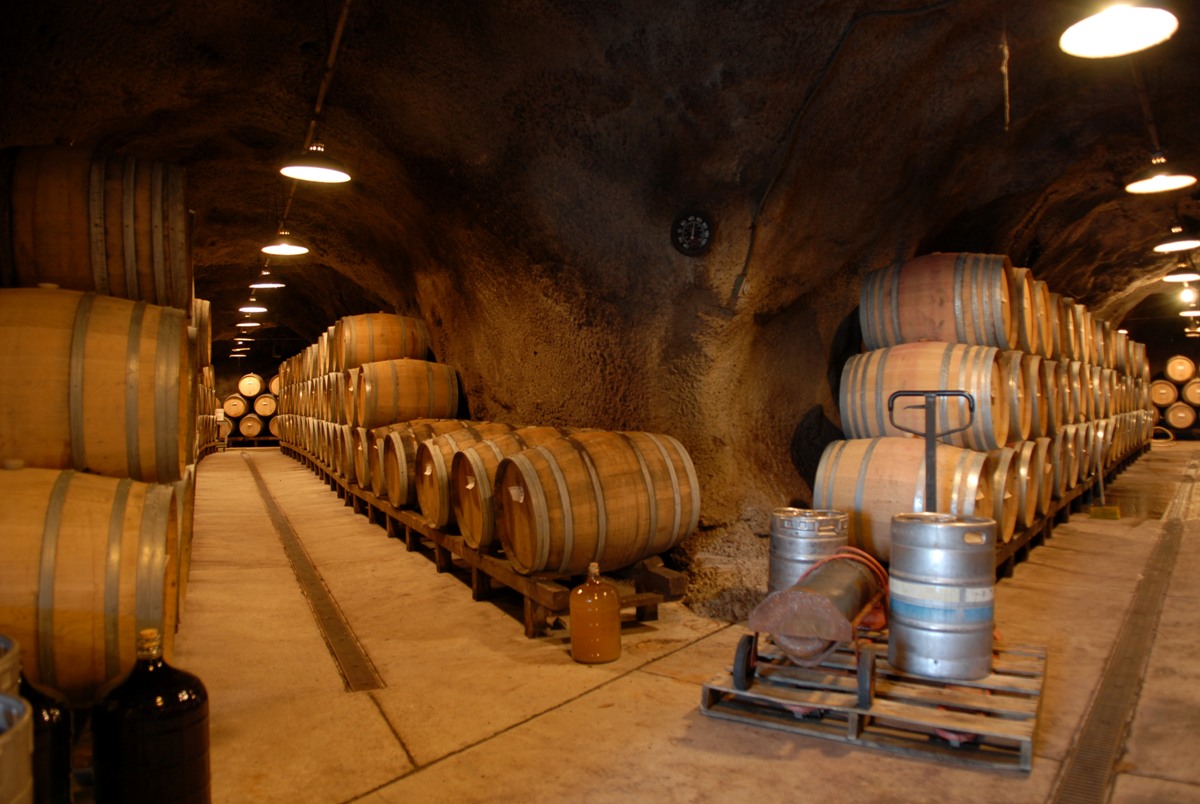
The Wine Cave, built in 1991
Starting in 1990, there was an amazing string of great vintages. Patterson had come into his own and felt now, after a decade, that he knew how to grow the grapes and make the wine to reflect this amazing property. The company was on a stable footing and he could focus on creating wines of nuance, longevity, and character.
During this time, the company built a 4,300-square-foot wine cave, rebuilt the water system, remodeled Martin’s old garage into an office space, and replanted almost all of the Chardonnay and Pinot Noir vineyards. The experience gleaned from the plantings in the 1980s, along with advancements in the grape growing industry as a whole, helped immensely. The winemaking, however, was still a work in progress. Although the fruit had great potential, Patterson was still polishing his vision of ultimate perfection.
Again, the Patterson’s friend Ron Tanaka found inspiration in the vines. He proposed a new idea to incorporate poems with photographs and paper, which would blend fact and fiction of a girl growing up at Mount Eden, much like Jeffrey and Ellie’s daughter, Sophie did. This series of 20 panels was featured for three months at the Highlands Inn, Carmel, in 1996. This art added an extra dimension to the Mount Eden brand and property. Many panels are currently displayed at the winery and can be seen digitally at www.themountedenpoems.com.
Expansion and Recognition: Estate Rebuilds and Domaine Eden is Born
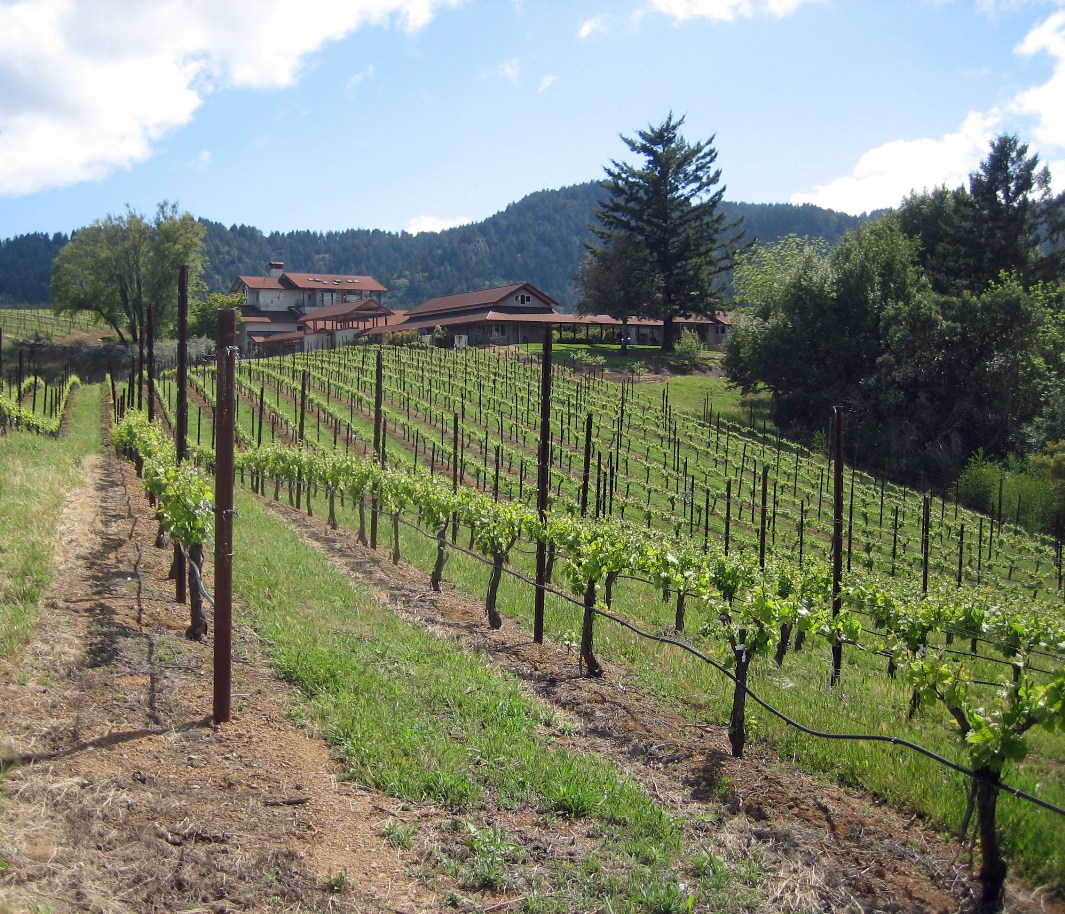
Domaine Eden
By the beginning of this decade, all of the vineyards had been replanted and designed by Patterson for sixty years of production. There were now 7 acres of Pinot Noir, 20 acres of Chardonnay and 13 acres of Bordeaux varieties: Cabernet Sauvignon, Merlot, and Cabernet Franc. Patterson’s winemaking goals had not changed; with continued emphasis on balance, length of flavor and rewarding longevity. What did change, however, were the yields from the new vines, which gave him more to work with. This allowed Mount Eden to start a new tier of wines called Saratoga Cuvée.
The first Saratoga Cuvée wine was from Cabernet Sauvignon grown at a local vineyard in Saratoga. Every year thereafter, other local vineyards were added to the blend, along with small lots of estate fruit. All the vineyards were farmed according to Patterson’s exacting standards, and yields were kept low to optimize their unique expression
In 2004, Jeffrey began making two Chardonnays from the estate vineyards: the more fruit-forward lots going into the Saratoga Cuvée, and the more tightly wound, rich, and nuanced lots going into the estate bottling. This change catapulted the Estate Chardonnay, Mount Eden’s flagship wine, to be recognized as one of California’s top Chardonnays on a consistent basis. The Wine Spectator named Mount Eden Estate Chardonnay one of its Top 100 Wines of the Year six times in seven vintages: 2004 (#13), 2006 (#11), 2008 (#13), 2009 (#26), 2011 (#11), and 2012 (#5)
Similarly with the Pinot Noir, certain lots of estate fruit, along with two new vineyards in Santa Cruz and Woodside, were designated Saratoga Cuvée.
Late in 2007, Mount Eden acquired the former Cinnabar wine estate, which was located up another 2-mile dirt road on a neighboring mountaintop above Saratoga. This beautiful property, developed in 1983 by Tom Mudd, was a godsend to Mount Eden. Three cut-and-cover caves and a modern tank room gave Patterson the ability to produce the mountain-centric wines to reflect the mid-appellation of the Santa Cruz Mountains. The property was renamed Domaine Eden.
Twelve acres were already planted to Pinot Noir and Chardonnay, including a small block of Cabernet Sauvignon. The wines formerly called Saratoga Cuvée now became Domaine Eden, sharing the design of the estate label. The current Domaine Eden Cabernet Sauvignon remains an appellation wine using vineyards in and around Saratoga, as well as some estate-grown Merlot and the Cabernet from Domaine Eden.
For thirty years, the Pattersons gradually acquired more shares in the winery. In 2008, Jeffrey and Ellie had the opportunity to become the majority shareholders, ensuring that Mount Eden Vineyards would remain a family-run wine estate.
Prominence and Prestige: The World Stage and Coming Home
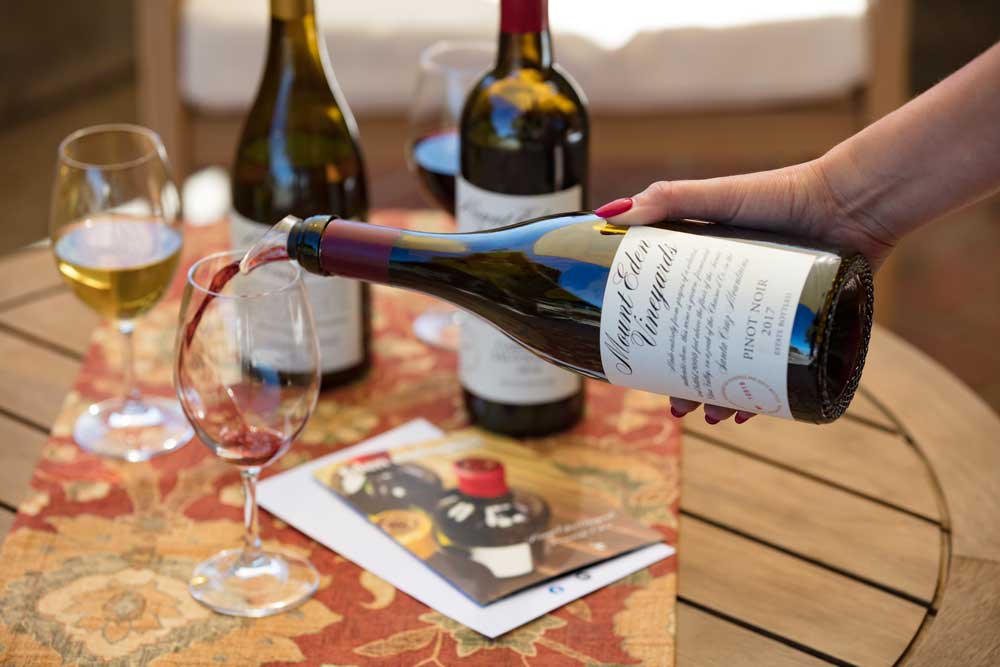
The tasting experience
The goal for this decade was to ensure that the Mount Eden estate wines continue to build prestige and gain international recognition, while expanding the market presence of Domaine Eden wines. This became especially prominent when Meghan Markle chose the 2014 Domaine Eden Pinot Noir as the “New World Wine” for her 2018 wedding to Prince Harry, making it our “Royal Wedding Wine” and significantly boosting the visibility of this new brand.
During this time the Pattersons’ children, Reid Patterson and Sophie Patterson Sharabi, returned to the winery to carry on their family legacy. Reid returned in 2017 to lead the vineyard team, mentored by Jeffrey. Sophie joined in 2018 to help develop the hospitality program.
With the development of the hospitality program, our first tasting experiences at Mount Eden were created. The winery was now open to the public.
Honoring Legacy and a New Chapter Begins
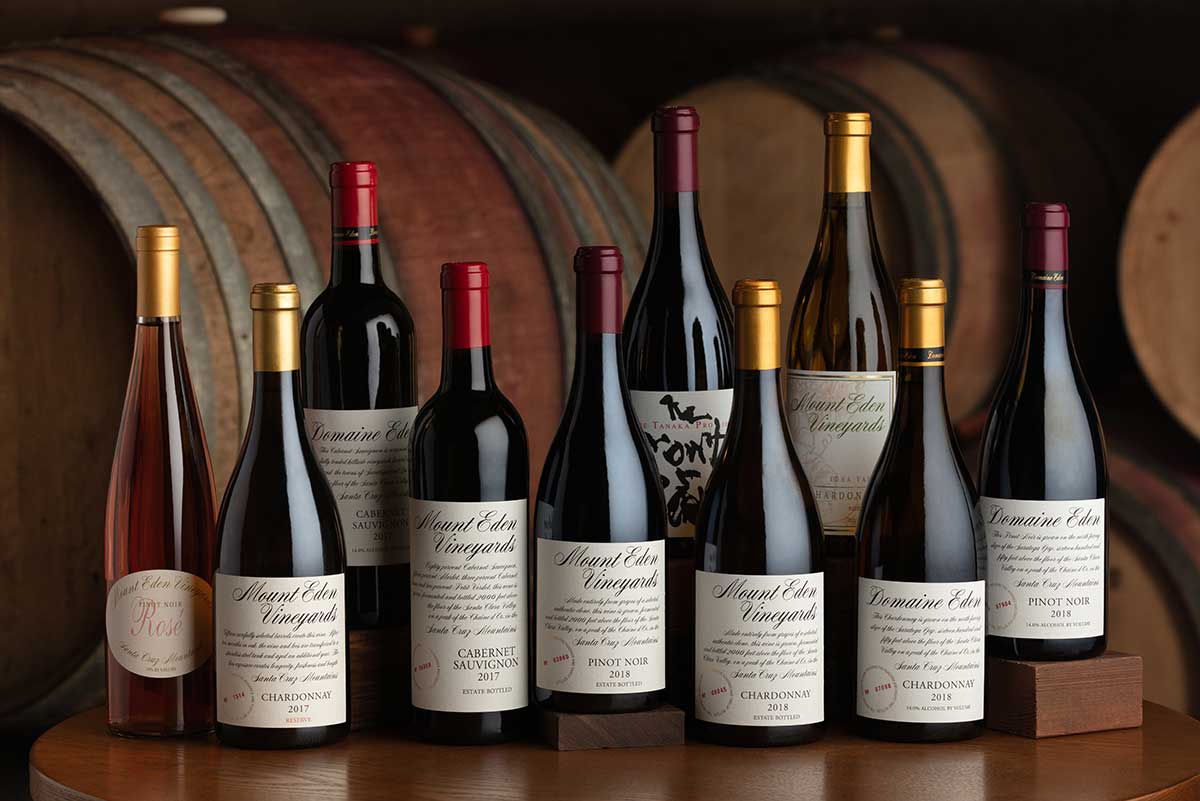
This decade will be pivotal to the continued development of the Mount Eden Story. In 2022, we marked 50 years as Mount Eden Vineyards, and in 2023, we celebrated Jeffrey Patterson’s forty years of dedication as our Head Winemaker.
On September 10, 2020 (Suicide Prevention Day), we introduced our first single-vineyard Pinot Noir in memory of our dear friend Ron Tanaka, who sadly took his life in 2007. This wine is named The Tanaka Project, with 25% of the proceeds donated to mental health charities.
Jeffrey and Ellie Patterson’s passion for Mount Eden remains strong, but they are beginning to step back as they approach retirement. Andrea Kyle was promoted to Director of Operations in 2022, followed shortly by Reid’s promotion to General Manager. As Jeffrey transitions to the role of Winemaker Emeritus, Austin Chin assumed the position of Head Winemaker in 2025.
We continue to expand our hospitality program and opened a second tasting room at our Domaine Eden Property in May 2024, which is available for events and weekend wine tastings.
Crafted with Devotion, Rooted in Legacy
Our Team
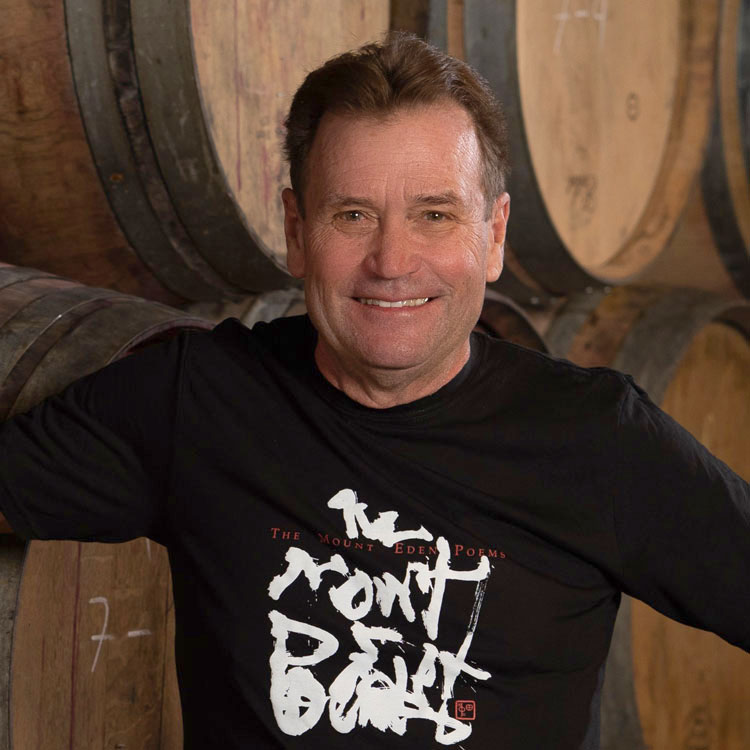
Jeffrey Patterson
Winemaker Emeritus
A native Californian, Jeffrey Patterson graduated from U.C. Berkeley in 1975 with a degree in biology. While in Berkeley, he witnessed and participated in the emergence of northern California’s fine wine and food culture. An enthusiastic wine drinker and collector, Jeffrey decided to pursue a career in the wine business and, in 1979, enrolled in the U.C. Davis viticulture and enology program, where he studied for two years.
In 1981, Patterson became assistant winemaker at Mount Eden Vineyards. He had visited the Santa Cruz Mountain winery in 1978 and believed Mount Eden, with its long history of fine wine production, would be an ideal place to practice his craft.
Jeffrey and his wife, Ellie, left Berkeley to begin a new life 2,000 feet above the Santa Clara Valley. In January 1983, a little over a year after his arrival, Patterson was promoted to head winemaker and general manager, and Ellie became the winery’s business manager. In 1986, they became significant shareholders in the company and, in 2008, the Patterson’s acquired the majority of the ownership with their two children, Sophie and Reid.
With over 40 years of experience at California’s original boutique winery, Jeffrey retired in 2025 and now guides the next generation as our Winemaker Emeritus. He continues to live in the house Martin Ray built on Mount Eden in the early 1950s, surrounded by the winery’s historic estate vineyard and a panoramic view of the now-famous Silicon Valley. He enjoys cooking for friends, playing tennis and being a grandfather.
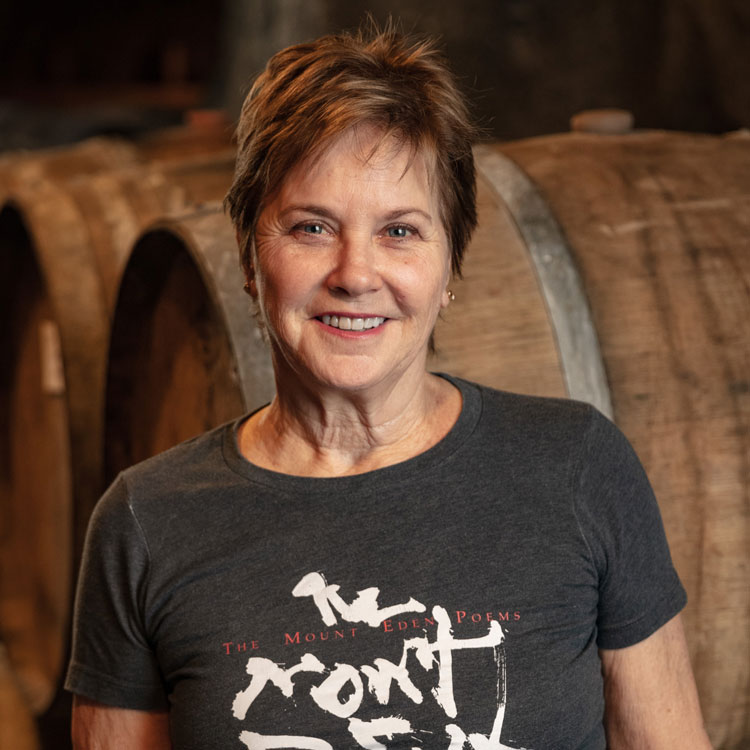
Ellie Davis Patterson
CEO
Ellie grew up in southern California and moved to the Bay Area in 1973. After graduating from U.C. Berkeley with a degree in history in 1976, she returned to school to study ornamental horticulture and worked for the UC Berkeley Botanical Garden writing educational material. She also studied textile arts and became a handweaver. Ellie met Jeffrey Patterson in 1978; they were married in 1980. After Jeffrey finished taking classes at UC Davis, they moved to Mount Eden, where she continued her textile arts until 1983, when she became the business manager at Mount Eden when Jeffrey was promoted to head winemaker.
After 40 years, Ellie is semi-retired and living in San Luis Obispo. She continues to guide the finance and marketing of both Mount Eden and Domaine Eden.
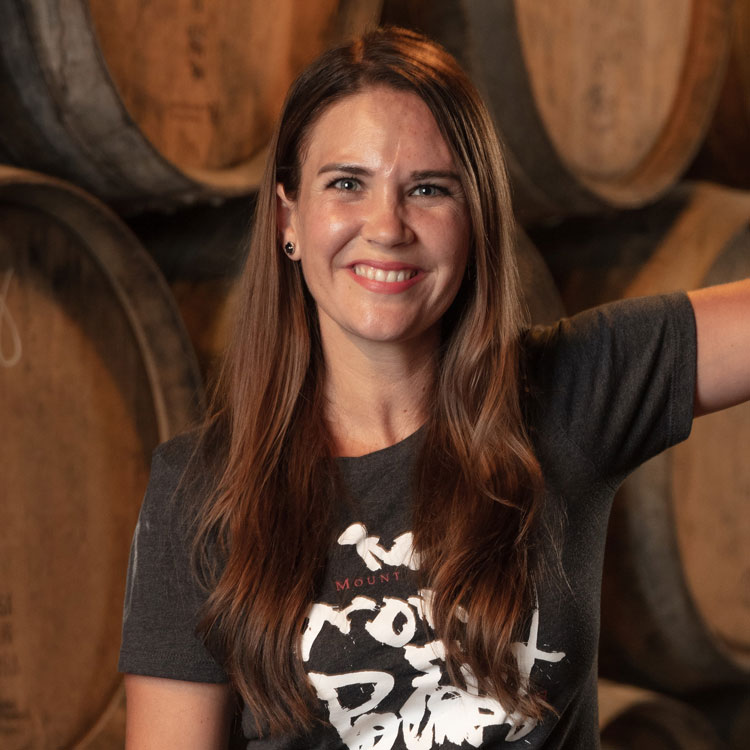
Sophie Patterson Sharabi
Corporate Secretary
Jeffrey and Ellie’s daughter, Sophie, grew up amongst the vines of Mount Eden.
Moving to San Francisco, she attended The University of San Francisco, where she studied nursing. In 2007, when Mount Eden began a partnership with Press Club, a joint tasting room, she managed the Mount Eden staff while also pursuing her passion for helping others as a registered nurse.
Inspired by her parents’ entrepreneurial spirit, she founded a fertility nursing service, which has grown into a thriving business. Sophie now lives in Los Gatos with her husband, Daniel, and their daughter, Eden—named after her former mountaintop home.
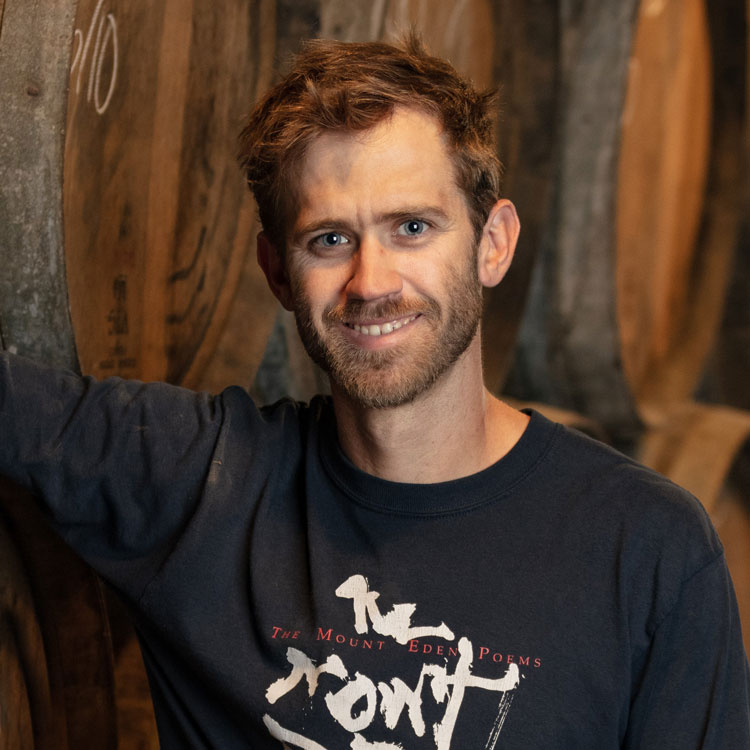
Reid Patterson
General Manager
Reid Patterson is Jeffrey and Ellie’s son, born and raised on the mountain-top.
Growing up here, Reid says he “always felt the pressure to make Mount Eden his career” and initially resisted the idea.
After studying chemistry and dabbling with another specialty beverage, coffee, he realized that Mount Eden is genuinely home and where he needs to be—returning at the end of 2017. With Jeffrey as a mentor for farming and winemaking, Reid has now taken on the role of General Manager. With a particular interest in viticulture, Reid embraces the unique challenges each season brings to the vineyards.
The return was meant to be, and Reid is excited to continue the family legacy.
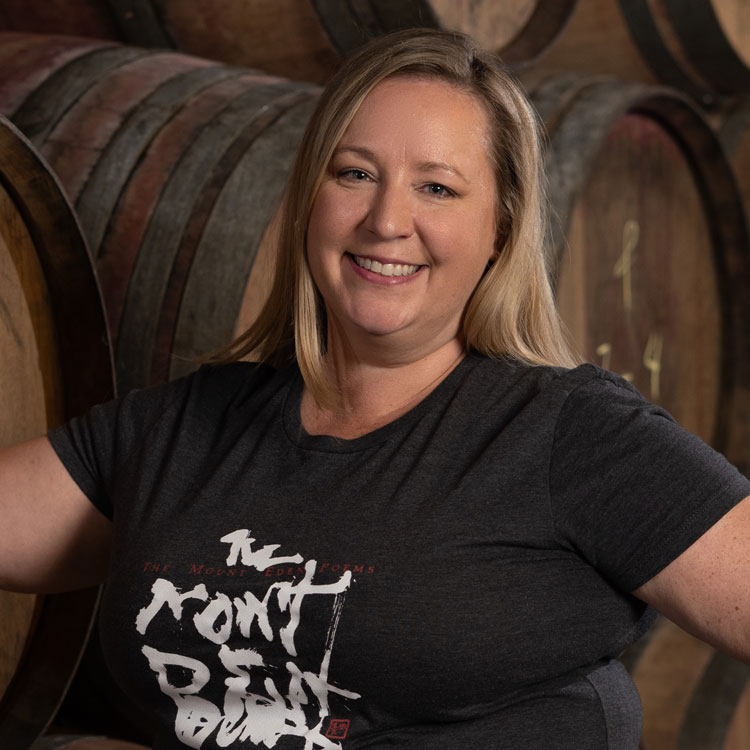
Andrea Kyle
Director of Operations
Andrea Kyle joined Mount Eden Vineyards in 2000 and is a vital part of the business team as Director of Operations. Born and raised in Illinois, she earned a BA in English Literature from Loras College in Dubuque, IA, where she began her love affair with wine. In 2009 she became a Certified Sommelier and in 2013 a Certified Specialist of Wine.
Andrea lives in San Jose with her husband and dog. She enjoys cooking, traveling, and of course, wine.
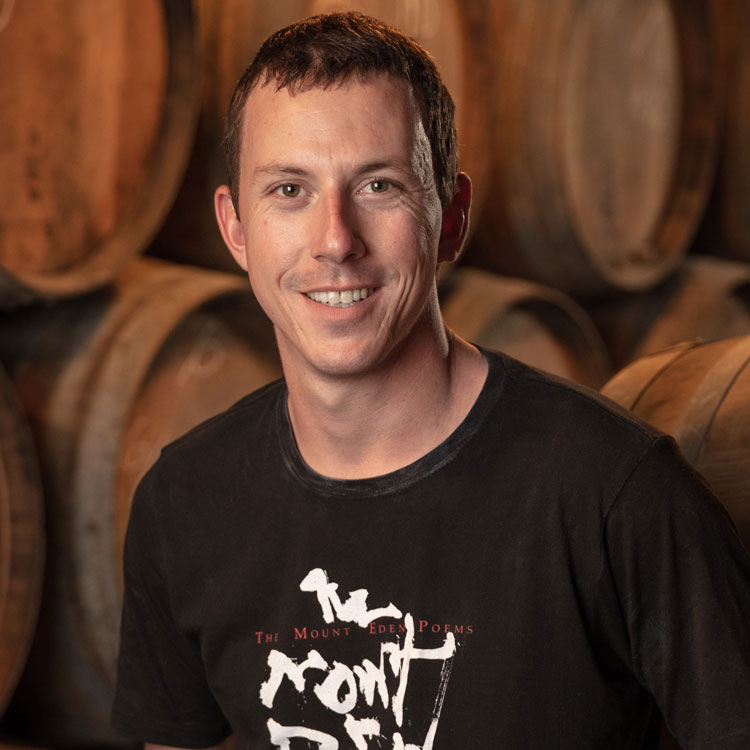
Austin Chin
Winemaker
Our Winemaker, Austin Chin, is a San Francisco Bay Area native, born and raised in Concord, CA. His passion for wine began when attending Cal Poly, San Luis Obispo, where, after switching majors, he obtained a BS in Wine and Viticulture (2014).
After graduation, Austin cut his teeth in the fine wine industry, working for multiple labels up and down the Central Coast of California. After “showing up” at Mount Eden Vineyards in late 2016, he was offered a cellar/vineyard position and has not looked back. His role at Mount Eden has evolved from assistant winemaker in 2018 to winemaker in 2025. He manages the crush pad during harvest and runs the bottling line in the spring, but most days are spent working side-by-side with Reid Patterson and the vineyard crew.
Outside of work, Austin enjoys skiing, fly fishing, spending time with family, and wine.
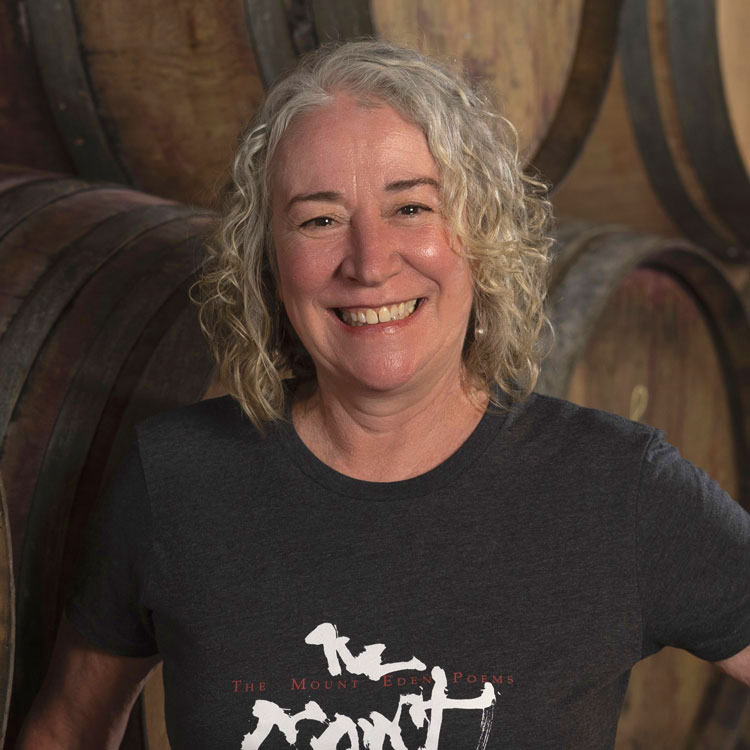
Michele Duckett
Sales Director
Michele Duckett is the newest member of our Mount Eden Team, joining us in 2019 as our Sales Director. A longtime resident of North Carolina, her passion for wine was sparked working in restaurants while earning a BA in English at Appalachian State University in Boone, NC. Her plans for graduate school shifted when she landed the job as General Manager of a top NC restaurant with one of the best wine lists in the state.
The wine bug had bitten.
She soon began an 8-year stint as the Western Regional Sales Manager for a Carolina based boutique wine wholesaler. This prepared her for her next tenure: 14 years as National Sales Director for Elyse, a small family-owned Napa Valley winery. When the owners opted to sell in 2018, she decided it was time to pursue a dream – “I have always been a huge fan of the Mount Eden wines, having sold them in both my restaurant and distributor days. I truly feel so fortunate to work with the Pattersons and to represent this iconic, historic winery and its extraordinary wines.”